


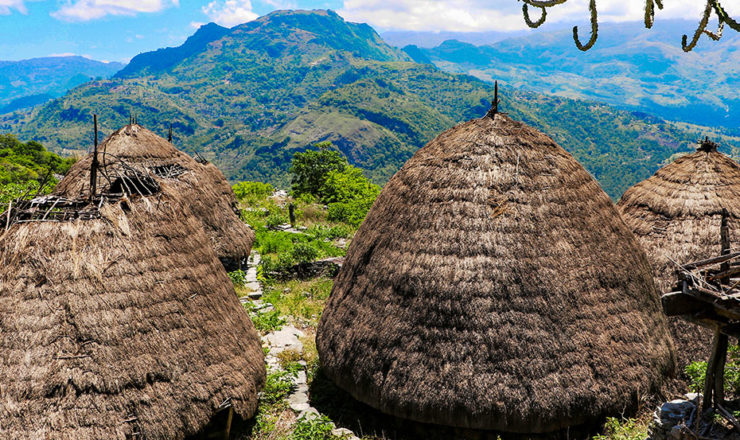
Timor-Leste is tiny, about the size of Connecticut, but it packs in an outsized mix of culture, history, and wild landscapes.
It sits on the eastern half of the island of Timor, with Indonesia occupying the western side, plus the offshore islands of Atauro and Jaco, and the Oecusse enclave, separated from the mainland by Indonesian territory.
Geographically, the country rises fast from coral-fringed beaches into rugged mountain ranges, creating dramatic scenery and equally dramatic road conditions.
Its modern history explains much of its current reality.
After centuries of Portuguese rule, Indonesia occupied Timor-Leste in 1975, triggering decades of conflict, resistance, and humanitarian crisis.
Independence finally came in 2002, but the scars remain.
Political instability, poverty, unemployment, and weak infrastructure continue to fuel periodic civil unrest, particularly in urban areas.
The country has made steady progress, but it is still very much a young nation finding its footing.
Geologically, Timor-Leste sits in a seismically active zone, which explains its steep mountains, deep valleys, and frequent earthquakes.
The coastline delivers postcard beaches, coral reefs, and exceptional marine biodiversity, while the interior offers cooler temperatures, cloud forests, and coffee-growing highlands.
Tourism remains small, with roughly 80,000 visitors each year, though the government aims to increase that to 200,000 by 2030.
Diving, eco-tourism, and cultural travel anchor that strategy.
Still, safety concerns, infrastructure gaps, and healthcare limitations need real improvement before Timor-Leste becomes a mainstream destination.
Warnings & Dangers in Timor-Leste

OVERALL RISK: MEDIUM
Timor-Leste has a medium risk, though more experienced global travelers might consider it a low risk. Most of the safety guidance relies on two things. First, understanding the unstable tensions in the country. Second, respecting the terrain from the challenging waters of the sea to the steep slopes of the mountains.

TRANSPORT & TAXIS RISK: MEDIUM
The safest way to get around Timor-Leste is by private driver. Renting a car puts you at risk of poor road conditions, aggressive drivers, and random checkpoints. Public transportation can be overcrowded and not well-maintained. Taxis are an option, but not all are regulated. Because of all the "what-ifs," this is also a medium risk.

PICKPOCKETS RISK: MEDIUM
I'm giving this a medium risk because the petty theft that does occur in this country generally targets tourists. Use extra caution in Dili, with enhanced attention to safety after dark.

NATURAL DISASTERS RISK: MEDIUM
Timor-Leste faces natural disaster risks tied to its rugged terrain and tropical climate, generating a medium risk. Earthquakes, tsunamis, landslides, and flooding are the main concerns, especially during the rainy season from December to April. Coastal areas can experience storm surges and rough seas, while mountainous regions are prone to road washouts.

MUGGING RISK: MEDIUM
The medium risk in this category is due to the presence of gangs and other mischievous groups that are relentless in their aggression when triggered. Because of this, visiting nightclubs is discouraged, as that's where battling groups might explode into violence.

TERRORISM RISK: LOW
The general concern of international terrorism is low, but the civil unrest risks should lead you to treat this as a medium risk. If a violent demonstration or unprovoked street attack happens, it will feel like a terrorist act.

SCAMS RISK: LOW
Scam risk in Timor-Leste is relatively low, but petty fraud still happens, mainly in Dili. Watch for overcharging taxis, inflated prices for tourists, fake tour operators, and sketchy “helpers” at ports or border crossings. Stick with reputable hotels and guides, confirm prices upfront, avoid flashing cash, and trust your gut when something feels off.

WOMEN TRAVELERS RISK: HIGH
Women should treat Timor-Leste as a high-risk destination due to widespread gender inequality, limited legal protections, and cultural norms that can enable harassment. Street harassment, unwanted attention, and intrusive behavior are common, especially for solo travelers. Outside Dili, support systems are thin. Dressing conservatively, avoiding isolation, and using trusted local guides can significantly reduce risk.

TAP WATER RISK: MEDIUM
Tap water in Timor-Leste is not considered safe for drinking. Even locals often boil or filter it first. Stick to bottled or properly treated water for drinking, brushing teeth, and ice. Outside major hotels, water treatment standards drop fast. Bring a solid water filter or purification tablets if you plan to travel to rural areas or stay longer than a few days.
Safest Places to Visit in Timor-Leste
The Timor-Leste Ministry of Tourism runs the official travel site www.timorleste.tl.
Use the Plan Your Trip section to look at suggested itineraries.
It might make planning your trip a little easier.
Most trips start in Dili, the coastal capital.
Here you’ll find the Cristo Rei of Dili statue, Resistance Museum, Tais Market, Santa Cruz Cemetery, and the National Museum, which together sketch out the country’s history, culture, and independence story.
Just east of Dili, the Atauro Island marine reserve is the country’s crown jewel, famous for world-class diving, coral reefs, traditional villages, and relaxed island life.
Nearby Areia Branca Beach, Dili Rock, and Tasitolu Lake make for easy day trips.
Head south into the mountains for cooler air and dramatic scenery.
Maubisse, Hatubuilico, and Mount Ramelau offer hiking, cloud forests, colonial-era buildings, and sweeping viewpoints.
Ramelau, the country’s highest peak, is a favorite sunrise climb.
Nearby villages showcase traditional weaving, coffee farming, and rural life.
Along the southern coast, Baucau stands out for its Portuguese architecture, freshwater springs, and clifftop ocean views.
Venilale Cave adds a historic and spiritual dimension.
Com Beach, Ira Lalaro Lake, and Jaco Island deliver pristine coastlines, snorkeling, birdlife, and wild landscapes that feel wonderfully untouched.
To the west, the Oecusse enclave mixes colonial forts, quiet beaches, hot springs, and remote villages.
Scattered throughout the country are WWII sites, resistance-era memorials, sacred caves, waterfalls, and traditional uma lulik houses.
Places to Avoid in Timor-Leste
The entire country of Timor-Leste comes with the second-lowest advisory rating from Western governments.
However, we’ve already touched on a few risks that should get your attention.
While there are no necessarily places to avoid, it’s smart to avoid going out at night.
If you do, never travel alone.
That statement is punctuated for women who face increased risks of harassment or assault in this conservative country.
Lower your risk of running into a saltwater crocodile by skipping the south coastal area.
Also, after reading numerous travel advisories, I would caution against using a ferry to get around unless you can verify safety standards.
Risks include traveling in rough weather, overcrowded boats, and a lack of life jackets or other safety equipment.
Safety Tips for Traveling to Timor-Leste
- The national police force is Polícia Nacional de Timor-Leste, commonly called PNTL. For emergencies, dial 112 from mobile phones, though response times can vary outside Dili. In rural areas, local police posts or village leaders are often your fastest help.
- There’s no nationwide emergency alert system like FEMA. Your best bets are local radio, hotel staff, embassy alerts, and social media pages run by government agencies. The U.S. State Department’s STEP program is smart for Americans.
- You’ll need a valid driver’s license from your home country or an International Driving Permit. Roads range from paved to pothole obstacle courses, and signage is minimal. Traffic rules exist, but enforcement can be flexible. Drive defensively, expect livestock crossings, and avoid night driving when possible. Rental agencies may require additional paperwork and deposits.
- Stone-throwing attacks on vehicles can happen during gang conflicts or periods of unrest, mainly in urban areas. These incidents are unpredictable and usually localized. Avoid demonstrations, political gatherings, and tense neighborhoods. If crowds form, reroute early.
- No vaccines are mandatory for entry, but several are strongly recommended. These include hepatitis A and B, typhoid, tetanus, and routine boosters. Rabies is worth considering if you’ll be around animals or rural areas. Malaria risk exists, so talk to a travel clinic about prevention.
- Without a system in place to explain beach conditions or water risks, local knowledge beats any app. Ask hotel staff, dive operators, and fishermen about currents, tides, and recent sightings of crocodiles. Conditions can change fast, especially during the monsoon season.
- Timor-Leste has spectacular diving, but safety standards vary. Always book with PADI-certified dive shops that follow international protocols, maintain equipment, and carry oxygen. Ask about emergency procedures and evacuation plans.
- The official languages are Tetum and Portuguese. Indonesian is widely understood, and English is common in hotels, dive shops, and tourism businesses. Outside those bubbles, English drops off quickly. Learning a few Tetum phrases goes a long way.
- Saltwater crocodiles live along Timor-Leste’s coasts, rivers, and estuaries, and they are very real. Never swim in rivers, murky water, or near mangroves. Stick to beaches locals actively use and always ask before entering the water.
- Same-sex relationships are legal, but social attitudes remain conservative. Public displays of affection, regardless of orientation, can attract attention. 2SLGBTQI+ travelers may face discrimination, especially outside Dili. Most visits are trouble-free, but discretion helps avoid awkward or uncomfortable situations.
So... How Safe Is Timor-Leste Really?
Timor-Leste comes with a Level 2: Exercise Increased Precautions advisory from the United States, Canada, and Australia.
That’s the second lowest of a four-tiered rating system.
Reasons for the elevated risk level include lack of healthcare, an unstable security situation, high crime rates, and civil unrest.
Tourists are often targeted by criminals, meaning you need to keep your wits about you at all times.
The risk of civil unrest can seemingly come out of nowhere.
Don’t let your guard down.
Gangs and militia groups operate in Timor-Leste, which can make places that would otherwise feel safe a little riskier.
That includes nightlife locations, restaurants, and the streets of cities.
All of this should make you think twice about a trip here, but it’s also worth noting that the tourism industry is not well-regulated.
While the tourism images showcase a beautiful destination, the risks here warrant your attention.
Then there are the natural risks, like weather-related issues, earthquakes, and subsequent tsunamis.
Ocean currents are strong around the island, too.
While the Level 2 rating doesn’t dissuade the average traveler, reading the most updated travel advisories is critical to knowing the latest risks.
How Does Timor-Leste Compare?
| Country | Safety Index |
|---|---|
 Timor-Leste Timor-Leste | 48 |
 Finland Finland | 86 |
 Dominica Dominica | 80 |
 North Macedonia North Macedonia | 55 |
 Kuwait Kuwait | 74 |
 Saudi Arabia Saudi Arabia | 46 |
 Ukraine Ukraine | 30 |
 Brazil Brazil | 52 |
 Ghana Ghana | 73 |
Useful Information

Visas
Visa rules in Timor-Leste change depending on how you arrive. By air or sea, most travelers can get a 30-day visa on arrival for about $30. Crossing by land is trickier. You usually need to secure a visa in advance from a Timorese consulate. Border posts are strict, paperwork-heavy, and not big on spontaneous travel decisions.

Currency
The official currency is the U.S. dollar, which makes money math refreshingly simple. Small bills are king, and change can be scarce, especially outside Dili. ATMs exist but are unreliable, and credit cards are rarely accepted.

Weather
Timor-Leste runs hot, humid, and tropical year-round. Dry season lasts roughly May through November, bringing clearer skies and better diving conditions. The rainy season runs from December through April, with heavier downpours, muddy roads, and occasional flooding. Temperatures usually hover in the mid-80s, so lightweight clothing, sunscreen, and a solid tolerance for sweat are essential survival tools.

Airports
Presidente Nicolau Lobato International Airport in Dili is the country’s main gateway, with limited regional flights from places like Darwin, Bali, and Singapore. This is not a bustling mega-hub. Expect simple facilities, slow processing, and occasional schedule changes.

Travel Insurance
Travel insurance isn't required, but you'll want to have it here. The medical industry is far below the standards most travelers would expect. Be sure that evacuation insurance is part of the package, and look for adventure insurance policies if you'll be doing riskier activities.
Timor-Leste Weather Averages (Temperatures)
Average High/Low Temperature
| Temperature / Month | Jan | Feb | Mar | Apr | May | Jun | Jul | Aug | Sep | Oct | Nov | Dec |
|---|---|---|---|---|---|---|---|---|---|---|---|---|
| High °C |
29 | 29 | 29 | 30 | 29 | 28 | 28 | 28 | 29 | 30 | 31 | 30 |
| Low °C |
23 | 23 | 23 | 23 | 23 | 21 | 20 | 20 | 21 | 23 | 24 | 24 |
| High °F |
84 | 84 | 84 | 86 | 84 | 82 | 82 | 82 | 84 | 86 | 88 | 86 |
| Low °F |
73 | 73 | 73 | 73 | 73 | 70 | 68 | 68 | 70 | 73 | 75 | 75 |











I like this information. Thank You.
Timor Leste is Safe country
Timor is safest country compare to some country. It’s unfair statement that saying Timor Leste not a safe country.
Michael Francis,Global Industries Group AU!
No place on Planet Earth including at home,is Safe,if you are not prepared to be Alert to the Environment & people around your at all Times! I have spent months on Business trips since 2013 & the people of Timor Leste, are not only kind, but friendly in their outlook on life,which for many is a Hard task, given JOBS & growth across the Nation, has not been the focus of the Political Elite! Times are changing but nothing can or should stop any person Male or Female, from Visiting this wonderful Country, which is a Place, that “GOD “calls his own Backyard!! Life is to LIVE not Wonder,why you have Missed out On by NOT GOING & TIMOR LESTE/EAST TIMOR!Its on the BUCKET LIST,& of many and once connected to the Timorese people & their Country, you will Return,Time & Time again!! By the way,Being a “Tourist” you have a GREAT WAY to be an” Individual Investor” in Timor’s Economic Growth for the Future, of its Young Vibrant,Positive Thinking Population! SO BOOK NOW & see the the Coral & Tropical Fish,yes even NEMO!!Do not let life Pass you in 2021!!!
Timor Leste (East Timor) is safe now
This info seems like it is what the writer imagines east Timor to be like, opposed to what it really is like, Muggings often at gun point?! When and where? Some supporting evidence would be great. I have l lived here since 2002 and have never heard of a tourist or expat being mugged at gun point. In my personal experience the crime rates here are much lower than countries in similar economic brackets, where the majority live below the poverty line. Perhaps this info is out of date, with the exception of traffic related incidents and politically motivated/related crime (ie The civil unrest 2006-2009, safe since 2009) I find it pretty safe here. I am raising my currently 8 year old daughter here as many expats are raising their children here.
This review bears no relation to the safety of Timor Leste. There is virtually no pickpockets, muggings or scams in the country. Young women do need to be careful, as they are targets of harassment, and young Timorese women are victims of worse. However, while there are some areas that are not safe – particularly at Dili is a safe place to walk around during the day. It is mot wise to show obvious wealth, but that is as much about good manners as safety. I highly recommend visiting Timor from a safety point of view. I lived there for 18 months so zi have some experience.
I am a Timorese and all I can say is this information is not 100% right. Timor is safe to compare with Indonesia or Papua New Guinea.
I agree with you the one made this information is again tourist
And the country is bulshit
Timor is one of safest country on earth
All are bullshit. What you write about Timor is totally bullshit. There have never been any intruders breaking into foreigners’ homes. There are no armed robberies. You are just trying to write bad things about Timor just to portray your bad imaginations. You were probably thinking about some other countries when you wrote this. For your information, Timor is the safest country on earth. Timor is a small country where its people have a big heart.
This information is false east timor is sefe country for the tour especially for white and black and Chinese we are so respected..
Appalling baseless review! Timor is the safest place on Earth!
This is a baseless review of Timor-Leste, fabricated in the authors imagination. I have lived here for 8 years, started a company here and now have my toddler children here. I am more fearful of my safety walking the streets of any city in the USA, than anywhere in Timor.
Unlike the US, Aust, or Europe, there are no muggings in Timor; civilians do not have, or can access guns. It is one of the friendliest places on earth.
Reviews like this are damaging to the economic prosperity of one the worlds youngest nations, who has great plans for sustainable tourism development.
Timor-Leste is the safe place in the world and have nice people to help. Maybe you face language barriers which is why you assume everything is at high risk.
This gave me a sense of Timor Leste’s dramatic landscape and rich history alongside practical safety notes on limited roads, sporadic service, and local conflict. The cultural insights and travel tips made me feel more ready and respectful for an adventurous
I visited East Timor last year and it was such a unique experience; the locals were incredibly friendly and I loved exploring those stunning coral reefs.
Experiencing the warmth of the locals in East Timor was something special; their curiosity and genuine kindness made me feel like I was part of something real, not just a passing visitor.